
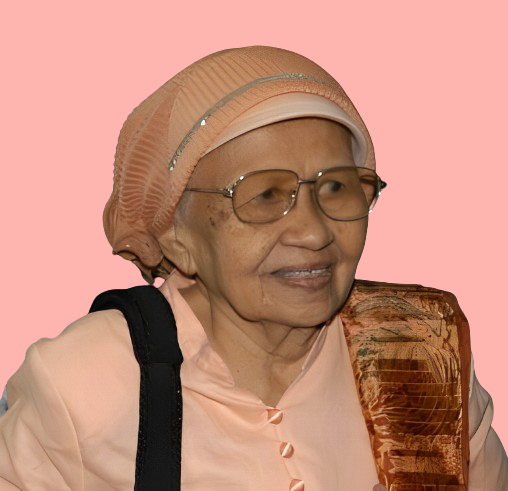
Dr. Hj Sri Adriati Tadjuddin Chalid, SpOG and the establishment of the Obstetrics and Gynecology section of the Faculty of Medicine, Hasanuddin University. Born in Makale, September 6, 1931 and graduated from the Faculty of Medicine UI Jakarta on August 5, 1959, I began working as a doctor and was obliged to work as an undergraduate starting November 1, 1959 to Makassar. At that time, because I was born in Makale, I was considered to be from South Sulawesi, even though I was only “born” in Makale, Tana Toraja. I started working as a seconded employee at the Army Health / Pelamonia Hospital, in the obstetrics department, assisting Prof. Makalew.
The situation in Makassar when I arrived was still chaotic and tense; it was still the time of the Darul Islam gangs. At that time I was not yet married, and I had no family here at all, but because it was my duty, I had to face it.
After serving 4 years, my plan was to return to Java, in 1963, but was detained by Prof. Makalew and invited to help him build the Obstetrics Section of FK Unhas. I started helping Prof. Makalew to teach midwifery to third year students at the
Faculty of Medicine Unhas in 1963 (so if you count – count me until now still teaching students for 42 years). At that time, educational activities in the hospital began at Pelamonia Hospital, then Academic, later at Dadi Hospital and Labuang Baji.
I graduated as the first ob-gyn specialist at the Faculty of Medicine in June 1967. I was the director of Dadi Hospital for 14 years, and Dadi Hospital tried to help the education of doctors as educational land and facilities. In the past, there was such a thing as a referral, so our team routinely operated in the regions, now the system has improved and there are many staff.
In the beginning, Dadi Hospital did not have a midwifery department, I tried to pioneer it by borrowing equipment from the surgery department, so that Dadi Hospital could open a midwifery department.
How was co-ass at first? In the beginning, there was only one co-assistant, midwives were limited, as well as facilities, and I had to accompany each co-assistant in every delivery, so I was more in the delivery room than at home (I wasn’t married at the time).
Number of assistants? At that time I was alone. A few years later, Prof. Agus, dr. Abdul Rauf, entered. Dr. S. Jubhari, Dr. Abadi, and Dr. Jul Manuputty followed.
The number and types of facilities at that time were very limited, and the economy was also very difficult. For example, how difficult it was to find blood at that time.
Prof. Agus
Even with limited facilities and personnel, but what makes me proud is that the spirit of work, discipline, cooperation, togetherness and kinship between students / co-assistants at that time was very good, health services and education could take place, and the results we can see now, they have become “people” who have become professors, doctors, heads of agencies etc., all out makes me feel proud and grateful to Allah SWT. And I am happy and grateful to be able to continue teaching in the Obgyn section of FK Unhas until now.
My hope for the Obgyn section of FK Unhas, we and all of you educators to continue to develop this section, with the latest technology, but don’t forget to build the conscience of our students. Don’t let their heads be full of theory and technology, but their consciences are not enriched with medical ethics and values.
In the past, we raised this section together and let’s build it together, because this task is not only the responsibility of those in the Makassar Obstetrics Department, but also the alumni, to continue to carry a good name and raise the image of our alamamater wherever they serve.
Hopefully the Obgyn Section of FK-UNHAS can continue to give meaning in the development of our nation.